







Why Speeding Up Pharma Deals Without Sacrificing Compliance Matters Now?
In the Pharma industry, time is more than money. It’s patient outcomes, market advantage, and regulatory trust.
Pharma contracts and deals in general are often weeks, if not months, in the making. The latest industry report states that over 60% of pharma contract cycles take longer than 30 days, primarily due to bottlenecks in manual reviews and compliance checks.
Regulatory scrutiny is also increasing. There is pressure on pharma companies to comply perfectly while accelerating deal cycles to keep pace with other companies. Balancing these two competing interests, speeding up pharma deals and ensuring compliance has now become a strategic priority.
Yet here comes AI and automation to and already change how pharma contracts are created, reviewed, and approved. From pharma contract automation to AI-powered legal tools, the industry is now adopting smarter workflows that accelerate progress in an impeccable manner.
Let’s dive in!!
The High Stakes of Speeding Up Pharma Deals Without Sacrificing Compliance
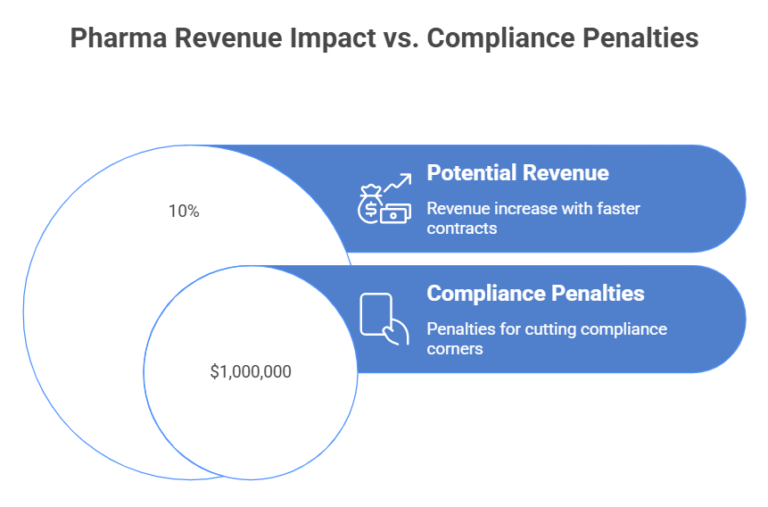
Revenue impact of delayed pharma contracts:
Potential revenue is lost with every day lost on a contract. Delays can result in bad licensing agreements, clinical trial partnerships, or vendor onboarding, all can push back product launches, slow down research, and dent investor confidence.
As a matter of fact, studies show large pharma firms can increase their annual revenue by 5 to 10 percent by increasing contract cycles by as little as 20 percent.
Compliance penalties for cutting corners:
Now, on the other hand, rushing contracts without compliance can bring disaster. For the FDA and EMA regulators, whatever the remedy is, it’s applied strictly, with penalties ranging from fines to product recalls.
In compliance and at maybe upwards of a million dollars, penalties smack of reputational damage.
Where Pharma Contracts Get Stuck: Hidden Barriers to Speed and Compliance
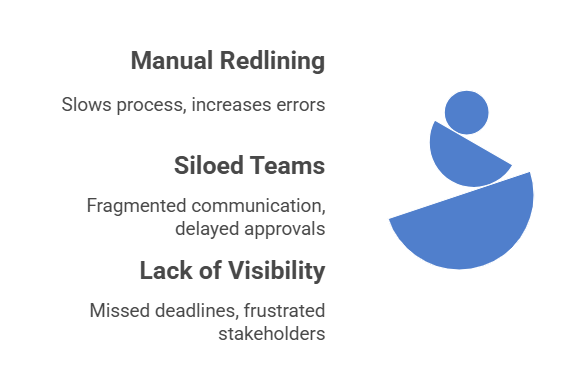
Manual Processes and Redlining Bottlenecks:Traditional contract workflows rely heavily on manual redlining, clause-by-clause reviews, and email-based approvals. This not only slows down the process but increases the risk of errors and missed obligations.
Cross-Functional Silos and Approval Delays: Legal, compliance, procurement, and business teams often operate in silos, leading to fragmented communication and delayed approvals. Without a unified platform, tracking contract status becomes a guessing game.
Lack of Visibility into Contract Status: Many pharma companies lack real-time visibility into where a contract stands, who’s reviewing it, what changes have been made, and when it will be finalized. This opacity leads to missed deadlines and frustrated stakeholders.
The Compliance Tightrope – Balancing Faster Pharma Deals with Regulatory Demands
Pharma is probably one of the most complex regulated industries in the world. Contracts have to comply with global standards like GxP, HIPAA, and GDPR as well as country-specific regulations. Speeding up deals without strong compliance takes a risk for companies, both legally and financially.
Regulatory compliance is free in pharma contracts, it is foundational. The challenge is in crafting quick but compliant workflows without overloading legal teams with the work.
Why Manual Redlining Slows Down Pharma Deals and Increases Risk
Manual redlining is time-consuming and error prone. Legal teams often review the same boilerplate clauses repeatedly, wasting valuable hours. Worse, manual reviews can miss critical obligations, leading to contractual liabilities and compliance gaps.
Smart contract redlining powered by AI can automate this process, flagging risky clauses, suggesting alternatives, and ensuring consistency across documents.
Smarter Ways of Speeding Up Pharma Deals Without Sacrificing Compliance
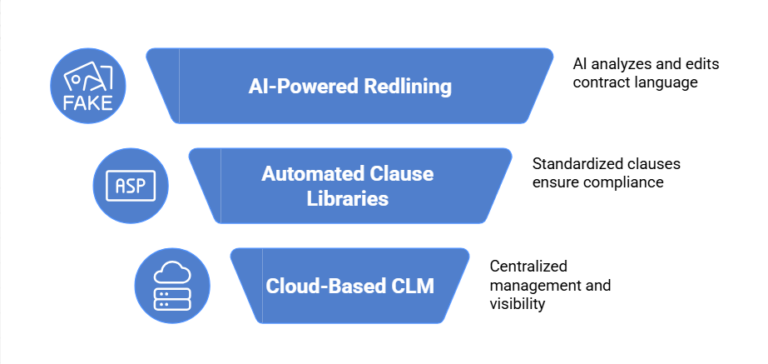
AI-Powered Contract Redlining Tools:These tools use natural language processing (NLP) to analyze contract language, identify risks, and recommend edits. They reduce review time by up to 70% and improve accuracy.
Automated Clause Libraries and Playbooks: Standardized clause libraries ensure that contracts use pre-approved language, reducing the need for repeated legal reviews. AI can match clauses to context, ensuring relevance and compliance.
Cloud-Based Contract Lifecycle Management (CLM): Modern contract lifecycle management (CLM) in pharma centralizes contract creation, negotiation, approval, and storage. It provides real-time visibility, automated workflows, and audit trails, all essential for compliance.
From Weeks to Days – How AI and Automation Transform Pharma Deal Speed
Accelerating Negotiation Cycles: Contract negotiation software for pharma powered by AI can simulate negotiation scenarios, predict counterparty responses, and suggest optimal terms. This shortens negotiation cycles from weeks to days.
AI-Driven Compliance Checks in Real Time: Legal AI for pharma can cross-reference contract terms with regulatory databases, flagging non-compliant language instantly. This ensures that speed doesn’t come at the cost of compliance.
Real-World Proof – Pharma Companies Already Speeding Up Deals Without Sacrificing Compliance
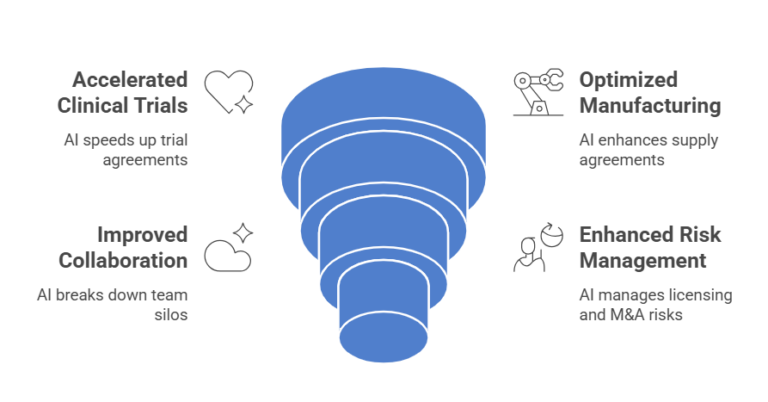
Across the pharmaceutical industry, organizations are increasingly adopting AI and automation to streamline contract workflows and reduce delays, without compromising compliance. Here are some generalized examples of how this transformation is playing out:
Accelerated Clinical Trial Agreements
Pharma companies involved in global clinical trials have used AI-powered contract lifecycle management (CLM) platforms to reduce delays in site contracting.
By automating clause selection and redlining, they’ve cut contract cycle times by up to 40%, enabling faster trial initiation and improved collaboration with research sites.
Optimized Manufacturing and Supply Agreements
Manufacturing teams have leveraged AI analytics to identify inefficiencies in supplier contracts.
By automating compliance checks and integrating contract data with operational systems, they’ve achieved measurable improvements in yield, cost control, and regulatory readiness, all while speeding up vendor onboarding.
Improved Cross-Functional Collaboration
Legal, compliance, and business teams have adopted cloud-based CLM tools to break down silos and improve visibility into contract status.
Real-time dashboards and automated workflows have helped reduce approval delays and ensure that contracts meet internal and external compliance standards.
Enhanced Risk Management in Licensing and M&A Deals
In high-stakes deals like licensing or mergers, pharma companies have used AI-powered legal tools to conduct rapid due diligence, flag risky clauses, and ensure alignment with global regulations.
This has enabled faster deal closure while maintaining a strong compliance posture.
These examples show that pharma deal acceleration is not just a theoretical goal, it’s a practical reality when supported by the right technology and governance.
Building Trust While Speeding Up Pharma Deals Without Sacrificing Compliance
Speed alone isn’t enough, stakeholders need transparency. AI and automation enhance trust by:
1. Providing audit trails for every contract change
2. Ensuring consistent use of approved language
3. Offering dashboards that track contract status and compliance metrics
This transparency reinforces credibility with regulators, partners, and internal teams.
A Practical Roadmap for Pharma Leaders to Accelerate Contract Cycles
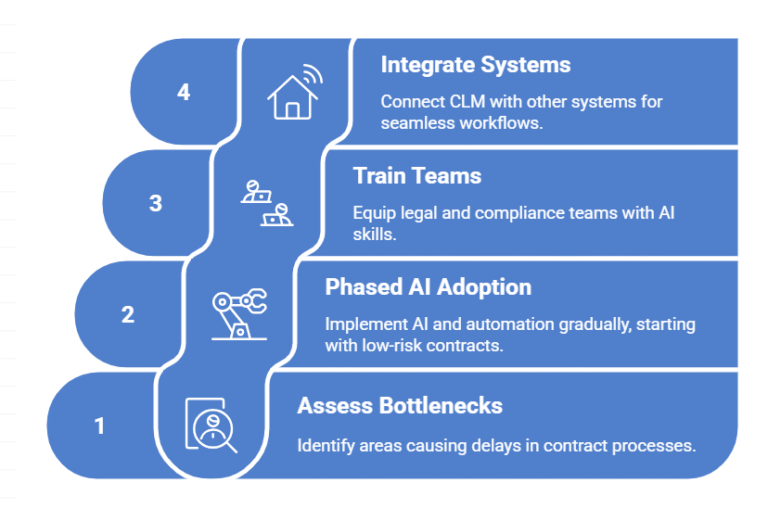
Assess Current Bottlenecks: Identify where delays occur manual reviews, approvals, or data entry.
Phased Adoption of AI and Automation: Start with low-risk contracts and scale gradually.
Train Legal and Compliance Teams: Equip teams with the skills to use AI tools effectively and interpret outputs.
Integrate Systems: Connect CLM platforms with ERP, CRM, and regulatory systems for seamless workflows.
Measuring Success – KPIs for Speeding Up Pharma Deals Without Sacrificing Compliance
Average Contract Cycle Time: Track how long it takes from initiation to signature.
Compliance Exception Rate: Measure how often contracts deviate from approved standards.
Cost Savings Per Transaction: Calculate savings from reduced legal hours and faster deal closures.
Common Pitfalls to Avoid When Automating Pharma Contract Workflows
Over-Automation Without Governance: Automation must be guided by clear policies and oversight.
Ignoring Change Management and Adoption: Tools are only effective if teams use them. Invest in training and support.
Final Word
Speeding up pharma deals without sacrificing compliance is not just possible, it’s essential. With the right mix of AI in pharma contracts, pharma compliance automation, and pharma contract workflow optimization, companies can achieve faster deal cycles, stronger compliance, and greater stakeholder trust.
Happy Learning!!
Start your journey toward intelligent contract automation today!
Accelerate pharma deals with AI-powered legal and
CLM tools—stay compliant, close faster.
FAQs
How can pharma companies accelerate deal cycles while staying compliant with regulations?
By adopting AI-powered tools that automate reviews, enforce clause standards, and provide real-time compliance checks.
What role do AI and automation play in streamlining pharma deal negotiations?
AI predicts negotiation outcomes, suggests optimal terms, and automates redlining, reducing negotiation time significantly.
How can legal and compliance risks be reduced during faster contract reviews?
Automated tools flag risky clauses, ensure regulatory alignment, and maintain audit trails for accountability.
What best practices ensure both speed and accuracy in pharma deal documentation?
Use standardized clause libraries, integrate CLM platforms, and train teams on AI tools.
How do digital workflows improve collaboration between compliance and business teams in pharma deals?
They centralize communication, provide real-time updates, and eliminate silos, ensuring faster and more compliant deal execution.
