LexiQA Immigra is an AI-driven document intelligence platform that automates pre-submission verification for H1, H4, and H4-EAD cases.
It extracts structured data, applies visa-specific rule validation, and ensures every case is complete, consistent, and USCIS filing-ready.
Standardize pre-submission validation, reduce RFEs, and scale case processing without increasing reviewer headcount.
Ensure consistent compliance across employee visa filings while accelerating preparation timelines and minimizing regulatory exposure.
Gain structured dashboards, rule enforcement visibility, and predictable filing workflows across high-volume case environments.
Implement AI-driven document intelligence integrated with existing workflows, improving automation without disrupting current systems.
Deploy scalable, secure, cloud-native verification architecture aligned with governance, access control, and rule versioning requirements.
Attorneys manually cross-check forms, supporting documents, and signatures, increasing turnaround time, reviewer fatigue, and exposure to avoidable filing errors.
Applications often proceed with missing evidence, unsigned forms, or outdated documents, creating last-minute escalations and avoidable submission delays.
Each visa category requires distinct validations, yet rule application remains inconsistent, increasing compliance exposure and regulatory filing risks.
Different reviewers apply subjective interpretations, leading to inconsistent case quality, variable risk thresholds, and unpredictable submission outcomes.
Undetected mismatches, eligibility gaps, and documentation inconsistencies significantly increase Requests for Evidence and costly case rework cycles.
Critical compliance knowledge resides in individuals rather than systems, limiting scalability, auditability, and standardized filing quality control.
Reduces manual review effort, speeds case preparation cycles, and enables faster, more predictable immigration filing timelines.
Improves data precision and eliminates oversight errors through automated validation and structured rule enforcement.
Ensures consistent validation logic across H1, H4, and H4-EAD categories, removing reviewer variability and compliance gaps.
Identifies compliance risks, documentation gaps, and rule violations before cases reach USCIS submission stage.
Supports role-based access, configurable rule versioning, and scalable infrastructure aligned to growing immigration operations.
| Component | Technology |
|---|---|
| AI Processing | Azure AI Document Intelligence + LLM Classification |
| Rule Validation | Database-driven visa rule engine |
| Platform | FastAPI application with real-time validation dashboard |
Define standard and non-standard validation rules within a centralized database to enforce consistent compliance logic across immigration filings.
Generate structured data from extracted document fields to enable rule evaluation and consistency checks.
Organize validation rules into visa-specific rule groups including H1, H4, and H4-EAD for targeted compliance enforcement.
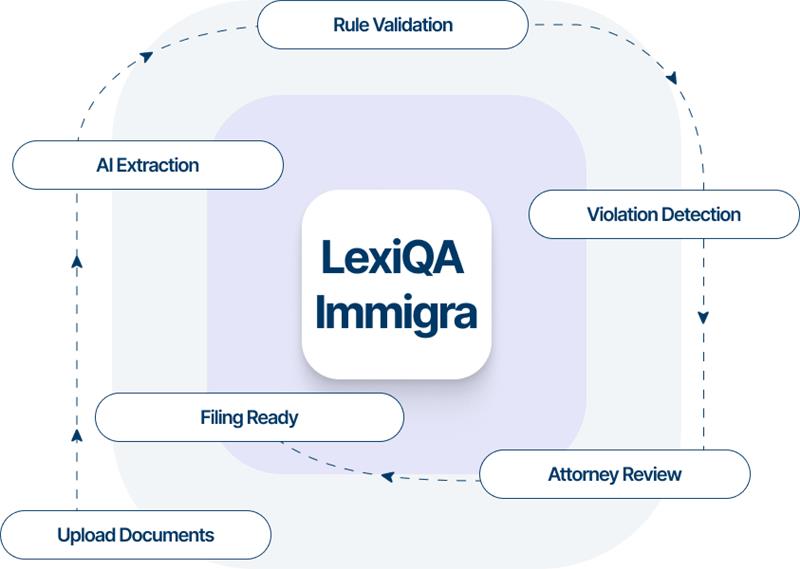
Apply selected visa rule groups to extracted structured data for automated compliance verification and validation checks.
Upload complete applicant document extracts in PDF format to initiate structured AI-driven processing and validation workflows.
Display comprehensive violation summaries within a structured dashboard highlighting compliance gaps and filing readiness status.
Leverage layout extraction and LLM-based classification to interpret document structure, content, and document types automatically.
Attorneys review flagged issues, resolve discrepancies, and finalize cases before USCIS submission to reduce RFE risks.
Define standard and non-standard validation rules within a centralized database to enforce consistent compliance logic across immigration filings.
Organize validation rules into visa-specific rule groups including H1, H4, and H4-EAD for targeted compliance enforcement.
Upload complete applicant document extracts in PDF format to initiate structured AI-driven processing and validation workflows.
Leverage layout extraction and LLM-based classification to interpret document structure, content, and document types automatically.
Generate structured data from extracted document fields to enable rule evaluation and consistency checks.
Apply selected visa rule groups to extracted structured data for automated compliance verification and validation checks.
Display comprehensive violation summaries within a structured dashboard highlighting compliance gaps and filing readiness status.
Attorneys review flagged issues, resolve discrepancies, and finalize cases before USCIS submission to reduce RFE risks.
Request a strategic walkthrough and experience structured, rule-driven filing intelligence built for scale.
Yes. LexiQA integrates with existing immigration case management systems through secure APIs, enabling seamless data synchronization and workflow continuity.
LexiQA currently supports key employment-based visa categories, with additional visa types planned as the platform continues to evolve.
LexiQA uses AI-powered extraction and validation to identify missing fields, inconsistencies, and compliance issues with high accuracy.
Most organizations can deploy LexiQA within a few weeks, depending on integration needs and workflow configuration.
HexaBot