






Azure Cloud Migration and Modernization: Building Resilient and Future-Ready Cloud Infrastructure
Across the United States, over 70 percent of enterprises report that legacy systems are slowing down their ability to innovate. At the same time, cloud adoption continues to accelerate, with more than 85 percent of organizations already using cloud services in some capacity.
Yet, despite this momentum, many businesses struggle with rising infrastructure costs, complex architectures, and systems that were never designed for today’s scale or speed.
Many organizations struggling with outdated infrastructure are now focusing on modernizing legacy systems to improve agility and scalability.
This is where Azure cloud migration and modernization become critical. It is not just about moving workloads to the clouds. It is about rethinking how applications, data, and infrastructure work together to deliver agility, resilience, and measurable business value.
A well-defined cloud migration strategy allows organizations to reduce operational overhead, improve performance, and unlock new capabilities through cloud modernization.
Microsoft Azure provides a comprehensive platform that supports this transformation from end to end. From infrastructure migration to application modernization and data platform evolution, Azure enables enterprises to move beyond limitations and build future-ready systems.
Cloud Adoption & Modernization Trends
Over 85% of organizations are already using cloud services
Up to 30% cost reduction with optimized cloud migration strategies
Up to 50% faster time to market with application modernization
Nearly 70% of enterprises cite legacy systems as innovation blockers
What is Azure Cloud Migration and Modernization
Azure cloud migration and modernization refers to the process of moving enterprise workloads to Microsoft Azure while enhancing them to take full advantage of cloud capabilities.
This includes:
- Infrastructure migration such as virtual machines and storage
- Application modernization to improve scalability and performance
- Data modernization to enable real-time analytics and AI-driven insights
Unlike traditional lift and shift approaches, cloud modernization with Azure focuses on transforming systems to become more efficient, flexible, and scalable.
Organizations leveraging cloud migration services often experience faster deployment cycles, improved system reliability, and the ability to scale operations based on demand.
In fact, studies show that businesses adopting cloud platforms like Azure can reduce infrastructure costs by up to 30 percent while improving application performance significantly.
Azure Cloud Migration and Modernization Process
Following a structured Azure migration checklist helps organizations systematically assess, plan, and execute migrations with minimal risk.
Assessment
Evaluate existing infrastructure, applications, and dependencies to determine readiness for migration.
Planning
Define the cloud migration strategy, prioritize workloads, and identify potential risks and cost implications.
Migration
Execute the transition by moving workloads and applications to Azure using proven tools and frameworks to migrate to Azure cloud efficiently.
Optimization
Continuously monitor and optimize performance, cost, and security to ensure long-term success.
This structured approach ensures that organizations can adopt Azure cloud migration services with minimal disruption while achieving measurable outcomes.
Benefits of Azure Cloud Migration and Modernization
Organizations adopting Azure cloud migration and modernization are seeing measurable improvements across cost, performance, and innovation.
Cost savings
Businesses can reduce infrastructure expenses through better resource utilization and cloud cost optimization strategies such as pay as you go pricing
Performance improvement
Modernized applications benefit from improved speed, reliability, and cloud performance improvement across distributed environments.
Scalability Azure
enables on demand scaling, allowing systems to handle fluctuating workloads without over provisioning.
Security
Built in security capabilities help organizations strengthen protection and meet compliance requirements.
Faster innovation
Teams can release features faster by leveraging modern development frameworks and managed services.
According to industry research, companies that modernize their applications in the cloud can achieve up to 50 percent faster time to market.
What’s New in Azure Migrate and Modernize
Microsoft continues to enhance Azure Migrate and modernization capabilities to simplify cloud adoption.
Key advancements include:
- Automation driven migration Reduces manual effort through intelligent workflows and cloud migration automation
- AI based recommendations Provides insights on workload placement, cost optimization, and performance tuning
- Dependency mapping Helps identify application and infrastructure dependencies to avoid migration risks
- Integrated modernization tools Supports seamless transition from legacy systems to modern cloud architectures
These improvements make Azure modernization tools more accessible and effective for enterprises at any stage of their cloud journey.
Why Businesses Choose Azure Cloud Migration and Modernization
Organizations choose Azure cloud migration and modernization because it delivers both technical and business value.
Azure provides a reliable cloud infrastructure that supports enterprise workloads with high availability and global reach.
Combined with enterprise cloud consulting services, businesses can accelerate transformation while ensuring alignment with long term goals.
Azure enables organizations to improve efficiency, scale operations seamlessly, and maintain consistent performance across regions.
Enterprise Grade Infrastructure at Lower Cost
Azure offers a global network of data centers across multiple regions and availability zones.
This enables businesses to build resilient systems while maintaining cost efficiency through cloud cost optimization strategies.
With flexible pricing models and efficient resource allocation, enterprise cloud infrastructure on Azure helps organizations reduce operational overhead without compromising performance.
Businesses can further enhance performance by adopting best practices for optimizing cloud infrastructure for performance and security.
Faster Innovation with a Managed Platform
Azure provides a wide range of Azure PaaS services that simplify application development and deployment.
By reducing infrastructure management efforts, teams can focus on innovation and deliver new features faster.
This approach supports cloud application modernization while enabling businesses to build scalable solutions on a fully managed cloud platform.
Trusted Cloud Security and Compliance
Security remains a top priority for enterprises adopting the cloud.
Azure invests heavily in Azure cloud security, offering advanced threat protection, identity management, and encryption capabilities.
Organizations benefit from strong cloud security compliance frameworks and robust data protection in cloud environments
This ensures that sensitive data remains secure while meeting regulatory requirements across industries.
Hybrid Cloud Flexibility
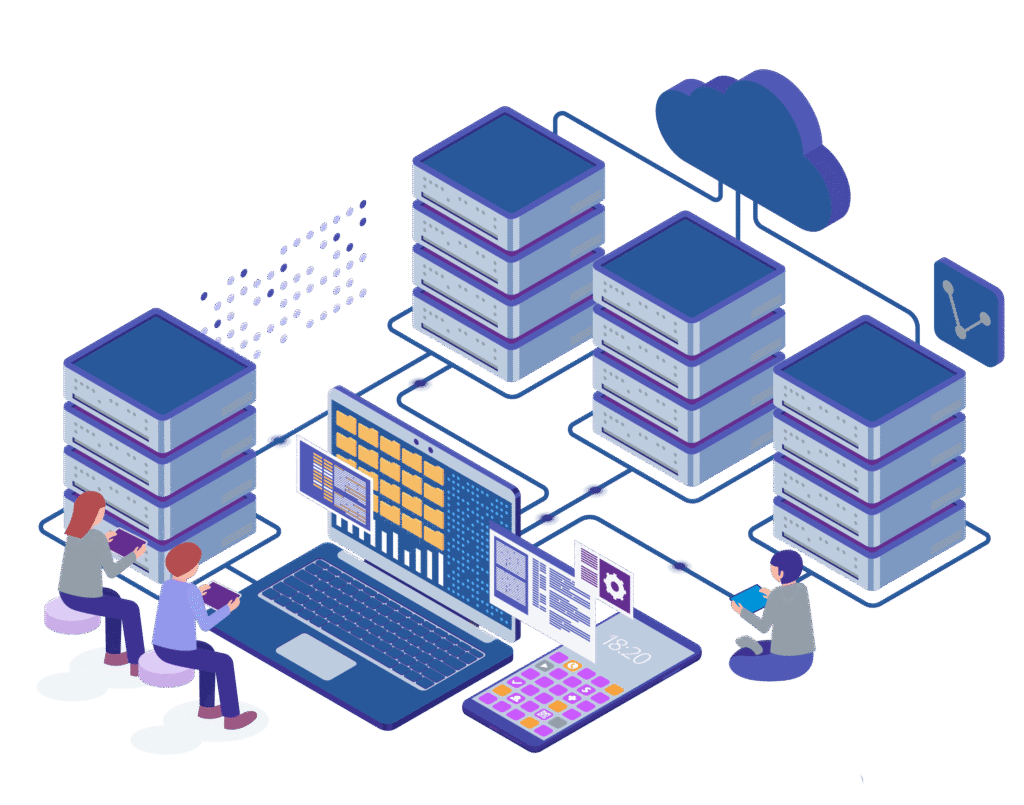
Many enterprises operate in hybrid environments that combine On-premises systems with cloud platforms.
Azure supports hybrid cloud solutions through services like Azure Arc, enabling seamless management across environments.
This flexibility allows businesses to modernize at their own pace while maintaining control over critical workloads.
Many organizations follow a structured on-premises to Azure migration strategy to enable seamless hybrid cloud adoption.
How does a real hybrid migration strategy translate into measurable outcomes?
Cost Optimization in Azure Cloud Migration and Modernization
Managing costs is a key aspect of any cloud transformation initiative. Understanding key cloud migration cost factors is essential for effective financial planning and optimization.
Azure supports cloud cost optimization through:
- Pay as you go pricing
- Resource right sizing
- Reserved instances and licensing benefits
- Continuous monitoring using cloud cost management tools
The Azure pricing model enables organizations to align costs with actual usage, ensuring better financial control.
Azure Migration and Modernization Program (AMMP)
The Azure migration and modernization program is designed to help enterprises accelerate their cloud journey.
Programs like AMMP often align with the Azure Cloud Adoption Framework to guide structured and scalable cloud transformation.
AMMP Azure provides guidance, tools, and expert support to reduce risk and improve migration outcomes.
This Azure cloud migration program enables organizations to modernize efficiently while ensuring business continuity.
Infrastructure Migration
Infrastructure migration focuses on moving workloads to Azure with minimal disruption.
Organizations planning large-scale transitions often focus on strategies to migrate enterprise applications to the cloud efficiently.
This includes lift and shift strategies and large-scale migrations such as SAP workloads.
Using infrastructure migration of Azure approaches, organizations can efficiently migrate workloads to Azure while maintaining system integrity.
Application Modernization
Modernizing applications is key to unlocking cloud value.
Choosing between approaches like re-engineering vs refactoring legacy applications plays a key role in modernization success.
Organizations can refactor, replatform, or rebuild applications using application modernization Azure strategies.
This enables businesses to modernize applications in cloud for better scalability and performance.
Azure Red Hat OpenShift
Azure Red Hat OpenShift provides a managed container platform for deploying and managing applications.
It enables enterprises to build scalable solutions using container based architectures while simplifying operations.
This makes it a powerful container platform Azure offering for modern application development.
Cloud Native Applications
Cloud native development focuses on building applications using microservices, containers, and serverless technologies.
Azure supports cloud native applications with services that enable microservices architecture and serverless computing Azure.
This approach improves agility and accelerates innovation.
Hybrid and Security Capabilities
Azure combines hybrid flexibility with strong security capabilities.
With integrated tools for governance and monitoring, organizations can ensure hybrid cloud security and maintain compliance using Azure Security Center and cloud governance frameworks.
Azure Migration Tools and Modernization Capabilities
Azure offers a wide range of tools to support migration and modernization.
These include:
- Azure migration tools for assessment and migration
- Azure App Service for application deployment
- Azure Kubernetes Service for container orchestration
These tools enable organizations to modernize efficiently while maintaining operational control. Leveraging Azure DevOps best practices further enhances deployment efficiency and operational control.
AI Powered Azure Cloud Modernization
Artificial intelligence is transforming how cloud environments are managed.
With AI in cloud computing, organizations can automate operations, predict performance issues, and optimize workloads.
Intelligent cloud automation enables faster decision making and reduces manual effort. Businesses are increasingly leveraging AI-driven automation for operational efficiency to streamline cloud environments.
This makes AI powered cloud modernization a key driver of efficiency and innovation.
Azure Cloud Modernization Strategy
A successful Azure modernization strategy focuses on multiple dimensions:
- Process modernization to improve efficiency
- Application modernization to enhance performance
- Database modernization Azure to support advanced analytics
A well–defined cloud transformation strategy ensures alignment between technology investments and business outcomes.
HexaCorp Azure Migration and Modernization Solutions
HexaCorp partners with enterprises to deliver end to end enterprise cloud consulting services for Azure transformation.
Our approach includes:
- Cloud readiness assessments
- Migration planning and execution
- Application and data modernization
- Ongoing Azure managed services
These cloud consulting solutions help organizations accelerate adoption while minimizing risk and maximizing value.
Cloud Transformation Outcomes
Faster migration with structured execution
Reduced risk through phased adoption
Improved performance with modernized systems
Better cost control with continuous optimization
Conclusion
Azure cloud migration and modernization gives enterprises the opportunity to go beyond infrastructure changes and rethink how systems, applications, and data create value. From improving performance and reducing costs to enabling faster innovation, the impact is both immediate and long term.
Organizations that approach this with a clear cloud strategy are seeing stronger outcomes, greater agility, and the ability to respond to change with confidence. Those who delay risk being held back by systems that were never designed for today’s demands.
The question is no longer whether to move.
It is how quickly you can transform.
Because in a world driven by digital speed, cloud transformation is not just an upgrade, it is a competitive advantage.
Every successful migration starts with the right plan and guidance.
FAQs
What is Azure cloud migration and modernization?
Azure cloud migration and modernization is the process of moving workloads to Azure and upgrading them to leverage cloud capabilities.
It includes transforming infrastructure, applications, and data for better scalability, performance, and agility.
Why should businesses migrate to Azure?
Businesses migrate to Azure to reduce infrastructure costs, improve performance, and scale operations efficiently.
It also enables faster innovation with access to advanced cloud services, AI, and global infrastructure.
What are the key benefits of Azure migration and modernization?
Key benefits include cost savings, improved performance, enhanced security, and on demand scalability.
It also enables faster deployment, better resource utilization, and continuous innovation.
What challenges do businesses face in cloud migration?
Common challenges include legacy system complexity, data silos, and integration issues.
Organizations also face concerns around security, cost management, and migration planning.
How does Azure support mainframe modernization?
Azure supports mainframe modernization by enabling rehosting, replatforming, or refactoring of legacy systems.
It provides tools and services to transform mainframe workloads into scalable, cloud-native architectures.
