






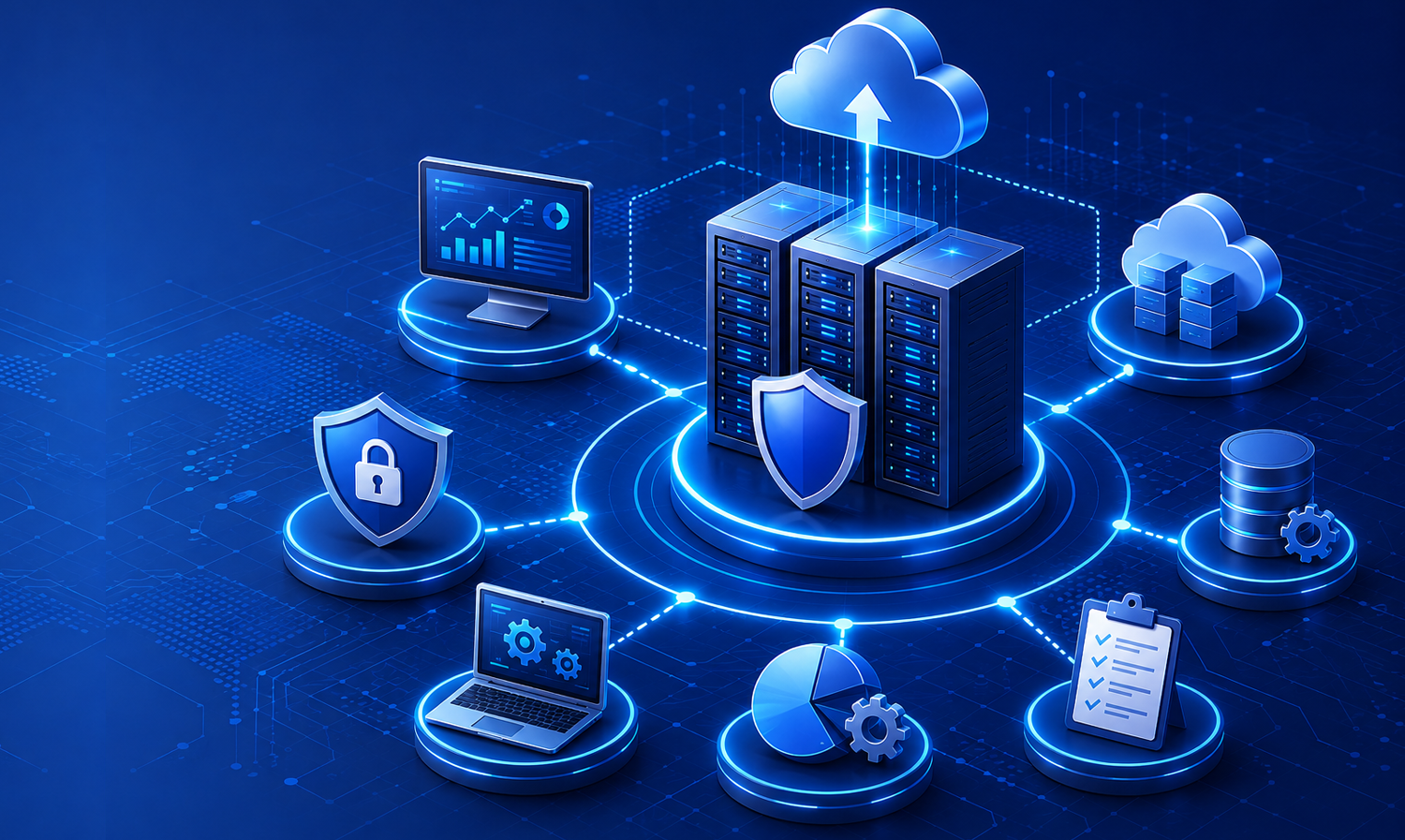
Key Takeaways
- Proactive monitoring helps prevent costly downtime.
- Standardization improves consistency and efficiency.
- Regular backups strengthen business continuity.
- Security and compliance reduce infrastructure risks.
- Modernization improves scalability and long-term performance.
Did you know that over 98% of businesses face IT downtime each year, costing companies up to $60,000 per hour? As digital dependency rises, reliable IT infrastructure is essential for smooth business operations.
IT infrastructure management covers the tools and strategies used to manage hardware, software, networks, and data for better performance, security, and reliability.
To stay secure, scalable, and competitive, businesses need IT infrastructure management best practices that improve performance, prevent disruptions, and support changing business needs.
This article covers the essential IT infrastructure management practices businesses need to stay secure, resilient, and efficient.
IT Infrastructure Downtime – Quick Facts

98%
businesses experience IT downtime annually

$560,000 per hour
average cost of enterprise downtime

70%
outages are caused by preventable issues like misconfigurations or lack of monitoring
Brief Understanding of IT Infrastructure Management
Effective IT infrastructure management system is vital for thriving in today’s digital landscape.
In enterprise IT infrastructure management, organizations focus on managing IT infrastructure proactively to improve uptime, optimize performance, and support business infrastructure management at scale.
It encompasses the supervision of hardware, software, networks, and data centers that drive information flow and support business activities.
This process demands a strong grasp of technology, security standards, and industry best practices. It includes tasks like monitoring system health, resolving technical issues, applying updates and patches, overseeing database backup and migration, and ensuring compliance with regulatory requirements.
Proactively managing IT infrastructure helps organizations reduce downtime, boost efficiency, strengthen security, and align with their broader business goals.
What is IT Infrastructure Management?
IT infrastructure management is the process of administering, monitoring, maintaining, and optimizing an organization’s IT ecosystem, including servers, networks, software, and cloud environments, to ensure operational efficiency and minimize downtime.
Is Your IT Infrastructure Ready?
Common Challenges in Managing IT Infrastructure
Managing IT infrastructure has become increasingly complex as businesses scale, adopt on-premises and cloud platforms, and integrate new technologies. One of the biggest challenges is maintaining system reliability across distributed environments.
With applications, databases, and networks spread across different environments, even minor issues can cause downtime. Keeping systems updated, patched, and monitored also requires continuous effort.
Another challenge is resource optimization. Without clear visibility into asset utilization, organizations may over-provision or under-provision infrastructure, increasing costs or creating performance bottlenecks. This makes effective well-architected capacity planning essential for operational efficiency.
Security is another major concern. Evolving cyber threats and expanding attack surfaces require strong access controls, vulnerability management, and continuous compliance monitoring.
Finally, scalability can become difficult as businesses grow or adopt new digital initiatives. Legacy systems may struggle to support changing demands, resulting in integration issues, slower performance, and increased risk.
These challenges highlight the need for structured infrastructure management processes and IT infrastructure management best practices to maintain stability, security, and scalability.
What Solving Infrastructure Complexity Looks Like in Practice
What are IT Infrastructure Management Challenges?
Common IT infrastructure management challenges include system downtime, lack of visibility, security vulnerabilities, resource inefficiencies, and managing hybrid or global IT environments effectively.
9 Best Practices to Follow to Manage IT Infrastructure Flawlessly
Successful IT infrastructure management relies on applying the right practices at every stage of operations. From monitoring and maintenance to security and compliance best practices, each aspect plays a critical role in maintaining system stability and performance.
The following best practices outline practical steps organizations can take to manage their IT infrastructure more effectively and avoid common operational challenges.
Standardization and Consistency

Establishing standardized processes, procedures, and technologies across an organization is essential for seamless enterprise IT infrastructure management. Standardization ensures that systems and applications work cohesively, improving operational efficiency, and reducing the risk of errors or downtime.
Equally important is maintaining consistency in how technology is configured, deployed, and maintained. Consistent infrastructure practices simplify management, enhance stability, and lay the groundwork for scalable growth.
By aligning both standardization and consistency, businesses optimize their IT environments, driving reliable performance and sustained technological advancement.
Standardization is a key part of infrastructure management best practices, ensuring consistency across enterprise IT infrastructure management environments.
Proactive Monitoring and Maintenance

Proactive monitoring and maintenance are vital for ensuring the long-term health of IT infrastructure management services. By employing real-time monitoring tools, IT teams can detect and address potential issues before they escalate into serious disruptions.
This involves reviewing system logs, tracking network bandwidth, monitoring server uptime, and measuring application response times. Regular performance testing combined with scheduled software updates and hardware inspections ensures that systems continue to operate efficiently.
Additionally, timely security patches help safeguard against vulnerabilities, guaranteeing smooth, uninterrupted IT operations.
Proactive monitoring is one of the most critical IT infrastructure monitoring best practices that helps organizations manage IT infrastructure efficiently and reduce downtime.
The most critical infrastructure failures aren’t caused by sudden breakdowns, but by issues that were visible and unaddressed.
Regular Backups and Disaster Recovery Planning

A robust backup strategy is fundamental for data protection, and regular backups are the foundation of effective disaster recovery planning.
Organizations must ensure that data from local servers, cloud storage, and virtual desktop environments is backed up consistently. An in-depth disaster recovery plan minimizes downtime and speeds up the restoration of operations in the event of an unexpected outage or data loss.
This plan should outline recovery steps, restoration timelines, and ongoing testing to verify effectiveness. Regular testing of recovery protocols ensures that organizations can quickly regain functionality and reduce potential losses.
Disaster recovery planning supports infrastructure lifecycle management best practices and ensures business continuity during critical failures.
Routine Audits and Assessments

Conducting regular risk management of IT infrastructure audits and assessments is critical for maintaining security across IT infrastructure. These evaluations help organizations identify system vulnerabilities, assess potential risks, and confirm compliance with relevant industry regulations.
Routine audits involve reviewing security protocols, network performance, and data backup strategies. By analyzing these components, businesses can uncover weaknesses and take corrective actions.
Periodic assessments offer valuable insights into infrastructure health, enabling organizations to make informed decisions about technology investments, ensuring ongoing improvement.
Routine audits strengthen IT infrastructure controls and improve infrastructure performance management across systems.
Preparing Your Infrastructure for What Comes Next
Redundancy and High Availability

Building redundancy and ensuring high availability are key strategies to reduce the risk of downtime and system failure. Redundancy involves creating duplicates of essential infrastructure components such as servers, storage devices, and network connections to serve as backups in case of failure.
High availability focuses on minimizing downtime by utilizing technologies like load balancing, failover mechanisms, and continuous monitoring.
Together, redundancy and high availability help ensure that critical systems remain operational by following disaster recovery best practices, thereby improving overall reliability and providing uninterrupted service to users, whether internal employees or external customers.
High availability is essential in critical IT infrastructure management to ensure uninterrupted operations and resilience.
Patch and Update Management

Keeping IT systems up to date with the latest software patches and updates is essential for maintaining security and performance. Patch management involves the regular deployment of security fixes and system updates to address vulnerabilities and enhance functionality.
A centralized patch management solution can streamline this process, ensuring that updates are applied consistently across all devices. However, it is crucial to test updates in a controlled environment before rolling them out to production systems, as patches may occasionally introduce new compatibility or performance issues. Following managing security patches and system updates helps reduce risks associated with unpatched vulnerabilities.
Patch management is a core element of IT infrastructure maintenance and helps reduce vulnerabilities across infrastructure systems.
Effective Vendor Management

Vendor management plays a significant role in ensuring smooth IT operations. Strong vendor relationships help organizations secure the necessary tools and services tailored to their infrastructure needs.
This process includes evaluating vendors based on their ability to meet performance standards, negotiating favorable contracts, and consistently monitoring their service delivery.
Effective vendor management minimizes risks, controls costs, and enhances the overall efficiency of the IT infrastructure. Establishing clear communication, transparency, and regular reviews ensures that vendor partnerships align with an organization’s evolving goals and requirements.
Vendor alignment plays a crucial role in enterprise infrastructure management and ensures optimized service delivery.
Strong vendor relationships are not built on contracts alone, but on continuous alignment with performance, accountability, and business outcomes.
Service Desk Support

A well-functioning service desk is a critical part of IT infrastructure management. It serves as the first point of contact for resolving technical issues, providing users with fast and efficient support.
Whether handling user requests, troubleshooting system problems, or managing IT incidents, the service desk ensures smooth day-to-day operations.
A responsive and knowledgeable service desk team enhances productivity by quickly addressing user concerns, minimizing downtime, and improving the overall user experience through IT service management processes.
Service desk operations are central to IT infrastructure operations and improve response time and user satisfaction.
Compliance and Regulatory Management

Maintaining compliance with industry regulations is essential for safeguarding sensitive data and ensuring operational integrity. IT infrastructure management must include regular checks to ensure adherence to regulatory requirements, such as GDPR, HIPAA, or ISO standards.
This involves implementing secure data storage and processing practices, conducting regular compliance audits, and staying informed about changing regulations.
Proactive compliance management not only reduces legal risks but also builds trust with customers and partners by ensuring that data is handled responsibly and securely.
Compliance ensures infrastructure management processes align with security standards and regulatory requirements.
How to Manage IT Infrastructure Effectively
Organizations can manage IT infrastructure effectively by combining proactive monitoring, automation, infrastructure planning, and centralized infrastructure management solutions. Aligning IT infrastructure strategy with business goals ensures long-term scalability and performance.
Conclusion
Incorporating these best practices into IT infrastructure management not only ensures operational reliability and security but also enhances organizational agility and long-term business success. By focusing on proactive maintenance, strategic standardization, and informed decision-making, companies can create an infrastructure that supports growth, reduces risks, and empowers employees. By following IT infrastructure management best practices and infrastructure management processes, organizations can build scalable, resilient, and efficient IT environments.
Move from Managing Infrastructure to Strengthening It
FAQs
What is IT infrastructure management?
IT infrastructure management refers to the processes and tools used to monitor, maintain, and optimize an organization’s core technology systems. It ensures that hardware, software, networks, and cloud environments run efficiently, securely, and reliably.
Why are IT infrastructure best practices important?
Best practices help businesses prevent downtime, reduce risks, and maintain consistent performance across all systems. They also enable scalability and support long-term digital transformation goals.
What are the key components of IT infrastructure?
Core components include hardware, software, networks, data storage, cloud services, and security systems. Together, these elements support business operations and ensure smooth service delivery.
How does proactive monitoring improve IT operations?
Proactive monitoring detects issues early before they disrupt workflows allowing IT teams to resolve problems quickly. It also provides valuable insights that help optimize performance and reduce operational costs.
What is the purpose of disaster recovery planning?
Disaster recovery planning ensures business continuity during outages, cyberattacks, or unexpected failures. It provides a structured approach to restore systems, minimize data loss, and resume operations swiftly.
How often should an organization conduct IT infrastructure audits?
Most organizations should perform infrastructure audits at least once a year to validate performance, security, and compliance. High-growth or highly regulated businesses may require more frequent assessments.
What role does a service desk play in IT infrastructure management?
A service desk acts as the central point of contact for resolving IT issues and supporting users. It enhances operational efficiency by tracking incidents, managing requests, and ensuring timely problem resolution.
What are IT infrastructure management best practices?
Key best practices include proactive monitoring, automation, standardization, disaster recovery planning, security management, and regular audits to ensure performance, reliability, and scalability.
What are common IT infrastructure management challenges?
Common challenges include system downtime, lack of visibility, security risks, inefficient resource utilization, and managing hybrid or global IT environments.
How to manage IT infrastructure effectively?
Organizations can manage IT infrastructure effectively by combining proactive monitoring, automation, infrastructure planning, and centralized management tools while aligning IT strategy with business goals.
